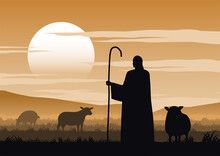
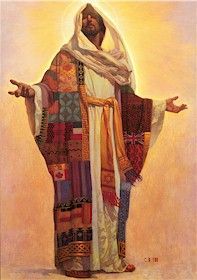
A sermon about the cost of standing up on behalf of others.

Genesis 21:8-21         

Matthew 10:24-39         

June 25, 2023

Rev. Fa Lane 


Faith at What Cost?

Those who find their life will lose it, and those who lose their life for my sake will find it.”


If the Genesis passage was in conversation with the Matthew passage, what would we overhear? To me, these two passages demonstrate that having faith in God requires something from us. In our modern life, we naturally want things to be easy to manage, not angst ridden, easy to schedule and not costing too much. We want to make decisions that don’t come with friction, jealousy or bring judgement. We want our journey for justice and liberty for all to be without sacrifices. 


But it rarely happens that way – transformation. By definition it means shedding something old and changing things. The butterfly struggles to emerge and HAS to struggle. That’s how it develops the strength to free itself from its cocoon and fly. You remember last week that the harvest is plentiful, but the laborers are few. This week, we look at what being a laborer for God looks like, what it costs us.


Sarah laughed when she was told she would have a child in her old age. She doubted God’s ability to provide her a son – doubting God was dangerous. When she was caught laughing at what God had promised, she denied it. You can sense her discomfort and worry that God would punish her for doubting.


Abraham was required to sacrifice Isaac, the son he had with Sarah. But he was spared that task at the last minute after an angst ridden walk to the top of the mountain holding the hand of that dear son. 


And, Hagar, banished because of a jealous Sarah, suffered in the desert with her young son Ishmael, also Abraham’s offspring. She placed him a distance from her, the text says, after the water in her skin pouch had run out. She couldn’t bear to watch her dear son die a slow death from dehydration.


These very personal tests of their faith in God, out in the desert, where they were in a land of strangers, having no army or government to protect them, relying solely on God’s provisions and their own wit – these tests were utter anguish and awful. Each of these characters heard from God, a voice, a whisper, something said by a stranger, or an angel that would transform their lives, and that of the world to come. Hagar and Sarah were both mothers of nations. Two nations of the Abrahamic lineage. 

We applaud Abraham’s trust in God. I think Hagar and Sarah should also be studied, for their responses are often ours—disbelief or resignation. And yet, we see that God does not forget them.


The Matthew passage holds some of my least favorite lines from Jesus. Verse 34 says: “Do not think that I have come to bring peace to earth; I have not come to bring peace, but a sword”. Wait, what? 


I thought Jesus was the Prince of Peace. 


The Gospel of Luke says “division” instead of “sword.” Daniel Harrington, in his commentary on Matthew, explains that the saying was just meant to bring attention to the cost of the decision to be for or against the gospel. Division among Matthew’s contemporaries would be a consequence of that decision. Oh. Is that all? The word ‘sword’ is just a poetic choice to show opposite of peace. I see.
 
What about verse 35? “For I have come to set a man against his father, and a daughter against her mother (and so on).” This gospel was constructed by Matthew from material found in Mark, believed to be the first gospel account written, and an ancient original source called “Q”. The words of Jesus here are known as the missionary discourse with instructions for the missionaries who would go to the lost sheep of the house of Israel.


The reference to division of the family was an apocalyptic saying based on a Micah passage about end times. You see, Matthew takes source materials texts from the prophet Micah, from Mark, an earlier gospel and from the “Q” source and heightens their impact for his 1st century church who is going out on a mission. That’s why some of the sentences seem a little disjointed. His editorial skill colors the mission with eschatological significance. He stresses that their behavior would be reckoned for or against them at the end of time. 

Let’s make the mission to be clear. This is what I tried to do this past Thursday night at the Youth Lock In. I mentioned to them that at the beginning of his ministry, according to Luke 4, Jesus read the scroll of the prophet Isaiah where it said that the mission is to bring good news to the poor, proclaim release to the captives and sight to the blind, to let the oppressed be free and proclaim a year of the Lord’s favor.”


But Jesus forewarns us. It’s going to cost you something to do this work. But he, also says, “don’t fear those who kill the body but cannot kill the soul”. Uh, Jesus, I’d really like to not end my life for spreading your Good News. Just for the record.


The danger involved with standing up for your faith, standing up on behalf of others is real. Pointing out unjust laws, bringing the light of insight and asking for personal transformation often doesn’t go over too well. We don’t like to be told we’re wrong – there is a lot at stake to my reputation, to my honor, to my sense of self if I’m wrong. We’re so caught up in being in favor with our culture and not our creator that we can’t see how loyalty to the first one offends the other.


When we pray, telling Jesus about the troubles we see, his ministry becomes our mission. Jesus says don’t be afraid to proclaim during the day what I whisper to you in the dark—in your heart, in your dreams. 


We don’t have to do this alone, like we’re in a desert among strangers. The United Church of Christ’s conferences and the national settings have stories to share with us and encourage us. The work of standing up for your faith in Christ’s love is being done in other communities across the state of PA and across the nation. We share values, in the name of Jesus, that seek to accomplish what he did - the mission points found in Isaiah.


Let me tell you that, in the upcoming Synod next weekend, resolutions to help bring in God’s light are being brought forward for discussion. They include but are not limited to discussions on reparations, gun violence, reproductive rights, trans and nonbinary people, white supremacy, green energy, use and disposal of plastics and concerns for public schools.

While there will be discussion, maybe disagreement, maybe some amended language offered for consideration, none of those will rise to ugliness, like we have seen and heard in our own community – even on our own property. Being a faithful follower of Christ may sometimes get you yelled at or threatened, made fun of, or shut out. But we’re told that what God speaks into our heart, in that secret place, we must tell it in the light. We are to proclaim what we have learned from Jesus, calling out hypocrisy, injustice, racism, phobias as in homophobia (fear of queerness), avoiding idolatry (that is seeking more of financial gain than of God’s favor). We are to choose to respect differences and love others because of our faith, not hate them with name calling or withholding opportunities or privileges. 

Christ’s entry into the world was to initiate a transformation among its inhabitants that would bring about peace. But, transformation, as we see in the butterfly, will cost you something. That’s what the Resolutions of Witness at Synod suggest. As our witness to faith in Christ’s ministry, we resolve to behave differently, or allocate our money differently, or to make sacrifices when necessary. The butterfly gives up its caterpillar existence to be able to fly in the warm light of the sun.

May you also live well in the light of God’s Son.

Amen.

By Galen E. Russell III March 22, 2026
Living Spiritually, Walking in God's Life Ezekiel 37: 1-14 Rev. Dr. Galen E. Russell III  John 11:1-45 March 22, 2026 “Jesus said to her, “I am the resurrection and the life. Those who believe in me, even though they die, will live, and everyone who lives and believes in me will never die. Do you believe this?” Prayer: Holy Spirit of God, we open ourselves to your Divine Presence, seeking your life within us. Amen. “Hey, did you hear Chuck Norris died?” That’s what Barb asked me just as I was beginning to write this sermon on Friday. No, at that moment, I didn’t know that. Walker Texas Ranger. The man who was an accomplished ator and expert at martial arts and won competitively. The man who promoted nutritional supplements and health foods. Chuck Norris was 86 years old. Ever since early February, in our church we’ve faced a lot of death. Charlie Wells, Janice Heberlig, Arlene Trimmer. Now Lynn Marsh is on Hospice care. So yeah, it’s been kind of a heavy six weeks. But watch this! In our bible readings there are dead, dry bones in the valley. But, God said, “I will put my spirit within you, and you shall live.” And we saw and heard that Lazarus was dead in the grave for four days! But, Jesus said, “I AM the resurrection and the life. Those who believe in me, even though they die, will live, and everyone who lives and believes in me will never die.” Do you believe this? Here we are, deep in the heart of Lent, striving to live spiritual lives, one week before Holy Week, almost two weeks before Good Friday’s stories of death, and we’re getting what feels to be precursors to Easter’s resurrection. Like God is just teasing us with some resurrection moments, prior to Easter, in the midst of the heaviness of death. Now as modern Christians, it’s difficult to take these bible stories as true literally. We don’t see bones coming together to form living human beings. It was Ezekiel’s vision. It’s clear in the text that Ezekiel’s dry bones is a metaphor for the nation of Israel. That even though the nation became like dismembered corpses, God would once again breathe life-giving spirit into it and reassemble it again. I can’t help but wonder if that isn’t a powerful metaphor for the nation of Israel today. And our nation as well, maybe becoming like a spiritual corpse I pray to God that this war stops and soon. And we don’t see dead people coming back to life, especially after four days. Just doesn’t happen. But, I don’t totally throw out the possibility of the miracle being true, though. Because in this universe with billions upon billions of galaxies, with so much that we don’t know, there just may be deeper laws such that the dead can be revived, even after four days. I don’t know But for now, I think it’s more important to discern meaning from this story on our faith journeys of learning more about living spiritually from it. So I was trying to figure out what struck me most about Lazarus being made alive again. And one thing that hit me was that his death was temporary. That he would presumably, later on, die again, this time permanently. And also, Martha and Mary, if they lived long enough, would one day grieve his death all over again. But it’s the temporary nature of death that spoke to me. Because Lazarus got a new lease on life, as we say. And Mary and Martha got second chances to be with him. More memories and life experiences. More opportunities to say the things that they may not have said while he was sick. Which makes me say—there is no better time than the present to say the things that matter to our loved ones, while there still is time. While they are near you. Tell those whom you love that you love them. Now. Speak words from your heart. Right away. Like the song “The Living Years” by Mike and the Mechanics says, “Say it loud, say it clear, you can listen as well as you hear. It’s too late when we die to admit we don’ see eye to eye.” And all of us face deaths of all types in our lives. And I dare say, all those deaths are temporary in nature. Sometimes for some, it takes a short period of time before life returns, sometimes for others, it’s longer. But, life does return. We find ways to recover. Our human spirit is resilient. It is enmeshed with God’s spirit of life, and we can walk in God’s life, if we choose. Notice I said, “walk in God’s life.” I was tempted to say “walk in God’s light.” Which may be expected. Because we often ask God to shed light upon our paths, so we can see. The psalmist wrote a long time ago “Your word is a lamp to my feet and a light to my path” (Psalm 119:105). We often ask God for blessings, comfort, healing, acceptance. We pray to God for answers, for guidance, for things, for prosperity, for justice. For ways out of tricky spots, for good grades. We pray for God to DO great things in our lives. But, turning Jesus’ phrase “I am the resurrection and the life” over in my mind made me wonder if we should pray for God to simply have the Holy Spirit of Christ’s life BE in our lives. Is it the life of Christ in my life that is the most important? Not just believing that he is the resurrection and the life, but having a personal relationship with the living Christ in my life. Is that the crux of the whole journey of living spiritually? Maybe we focus too much on what God can Do for us, and less on having God’s life Be in us. What if a part of what living spiritually means is flipping that around? That we focus more on God’s life in us and less on what we want God to do for us? You’ve heard, haven’t you, that our bodies are temples of the Holy Spirit? I think that means we are the places where God’s Holy Spirit lives. The Holy Spirit that lived in Jesus lives in us. The Holy Spirit of God and God’s Son is part of our spirit. So, as we walk in God’s life, I think we have the responsibility of keeping our spirit and our bodies in alignment with the Son of God’s Spirit within us. Which means, I think in part, that maybe we have to evaluate some things that we’re doing to our bodies that may clearly not be in the best interest of taking care of the temple where God lives. Just sayin.’ This is for me with needing more sleep and exercise. It may be for you something to do with what you’re eating or drinking or other habits. I think it also means that we may have to evaluate what we’re doing or not doing in our spirit which may detract from the life of the Holy Spirit prospering in us. Like focusing on dominating others, individualism, or win-lose dynamics. These can cut us off from the divine spirit. Like this past week, I was blown away that the Pew Research Center said 34% of people say they don’t pray or seldom pray at all in their lives. Which I don’t believe, by the way. Because even the most rudimentary, the most guttural thought of “help” in a difficult situation is a prayer. So, I think everybody prays—whether you know it or not. But, as people of faith, who are practicing living spiritually, having an intentional prayer life, in some way, is I think is walking in God’s life. Carving out devotional time, is a way of walking on life’s journey in God’s life and tending and nourishing the life of Christ within you. Its not going to grow and thrive unless you tend to your relationship with God in Christ in you. And the really good news is that as we walk in God’s life, God’s presence brings a breath of life that even in the deepest grieving we may face, can make us say, “It is well with my soul.” When we walk in God’s life, that brings a peace that upholds us each day, and can cause us to say, “It is well with my soul.” When sorrows come in our lives, even as we walk in God’s life, we will be able to say, [say it with me] “It is well with my soul.” When we are in the Spirit, and our cells and souls are animated, and we awaken to divine energy with every breath, we can say, “It is well with my soul.” Though evil can tempt us, though trials can come, though death in its variety of temporary ways can make us feel like it has won, we still can recover. Life finds a way, and we will be able to say, “It is well with my soul.” And oh my, when we feel sinful, or helpless, or guilty, or shame, or despair, when we walk in God’s life, we still can proclaim, “ It is well, it is well with my soul!!”
By Galen E. Russell III February 24, 2026
A sermon about the devil, evil personified, and focusing on God during our Lenten and life journeys.
By Galen E. Russell III February 19, 2026
“Secret Prayers, Public Faith”
By Galen E. Russell III February 9, 2026
A sermon on using smart technology, the wisdom of God, and the intersection of faith and culture.
By Galen E. Russell III February 2, 2026
A sermon about Minneapolis’ protests and the paradox of trusting God’s foolishness with faith.
By Rev. Dr. Galen E. Russell III January 25, 2026
A sermon about Bad Bunny, finding unity in loving relationships
By Galen E. Russell III January 20, 2026
A sermon about our response to God’s open invitation to come and see and follow Jesus.
By Galen E. Russell III January 12, 2026
A sermon about maturing on the Christian journey of faith.
By Galen E. Russell III January 5, 2026
A sermon about choosing God's light in our lives.
By Galen E. Russell III December 29, 2025
A sermon about letting the salvation of God which arrives with Jesus’ birth change us.
More Posts