The Genesis of Our Faith
Matthew 10: 24-9 Rev. Dr. Galen E. Russell III
June 21, 2026
“… for it is through Isaac that offspring shall be named for you. As for the son of the slave woman, I will make a nation of him also, because he is your offspring.”
Prayer: Holy One, as we look at the beginnings of our faith’s heritage, help us to see more of what you value through the lives of our faith ancestors. Amen.
Last Sunday was a momentous day when Lisa Clark was here preaching her candidate sermon. Her sermon featured the call of Abraham and Sarah, and Isaac’s birth, both stories from Genesis.
And I mentioned that it was good timing because the Bible readings we heard last Sunday were precursors to our four-part summer worship series called “The Genesis of our Faith.” Our worship series will explore some of the courageous lives of the ancestors of our faith. It will delve into the humanness (the good and the not-so-good) of these characters. And I’ll try to connect this heritage with our modern-day faith.
Of course, Abraham, Sarah, and Isaac are key progenitures of our faith, but we often don’t hear the back story. We rarely hear about Hagar and Ishmael. And linking it with last Sunday’s text, we know that Sarai (that was her name initially) couldn’t have children. And Abram (that was his name initially) and Sarai grew old together without children. Abram was 86 and Sarai was 77 at this point in their lives.
But back in those days, having children was huge. Necessary to carry on the family line. And to have an heir to receive the family inheritance. So old Sarai had a young Egyptian slave girl named Hagar, and Sarai gave Hagar to Abram as a wife, so at least Abram would have a child as an heir. Of course, Hagar conceives.
And, right then the trouble starts. A nasty relationship between the two women begins. Hagar looks at Sarai with contempt, and Sarai, with Abram’s consent, treats Hagar harshly. Hagar runs away from Sarai to get away from Sarai’s meanness.
But an angel of the Lord finds Hagar and tells her to go back to Sarai and to submit to her. But the angel also says that God has heard and given heed to Hagar’s affliction, which was being despised by Sarai. And Abram’s son in Hagar’s womb is to be named Ishmael because “God hears.” And Ishmael is born (see Genesis 15-17).
Jump ahead thirteen years. By now God changed Abram’s name to Abraham. He’s 99 now. Sarai’s name was now Sarah. She’s 90 now. And God promised that old Sarah and old Abraham would have a baby. They both laughed at the idea. But have a baby, they did. And God told them to name the boy Isaac, which means “laughter.” So, Isaac was born and nursed.
This is where our bible reading begins.
8 The child [Isaac] grew and was weaned; and Abraham made a great feast on the day that Isaac was weaned.”
9 But Sarah saw the son of Hagar the Egyptian [Ishmael], whom she had borne to Abraham, playing with her son Isaac. [this is a 13 year old youth playing with a toddler—quite common, right? Nice family fun. But Sarah’s nasty jealousy raises up again] 10 So Sarah said to Abraham, “Cast out this slave woman [Hagar] with her son [Ishmael]; for the son of this slave woman shall not inherit along with my son Isaac.” 11 The matter was very distressing to Abraham on account of his son. [Of course it was! As a father, Abe’s firstborn and his mom were about to be kicked out of the family!]. No wonder Abe was distressed!
12 But God said to Abraham, “Do not be distressed because of the boy and because of your slave woman; whatever Sarah says to you, do as she tells you, for it is through Isaac that offspring shall be named for you. 13 As for Ismael, the son of the slave woman, I will make a nation of him also, because he is your offspring. [So, there it is… the genesis of our faith has the two offspring of Abraham as cherished by God.] God has a bigger picture in mind.
14 So Abraham rose early in the morning, and took bread and a skin of water, and gave it to Hagar, putting it on her shoulder, along with the child, and sent her away. [That’s it? Bread and water? The only provisions? This sounds just plain stupid. Or was it like maybe an act of faith on Abe’s part, trusting in God to make good on the promise God made to Hagar and Ishmael?]
And [Hagar] departed and wandered about in the wilderness of Beersheba. [Do you feel the impact of this sentence? A single mom and her 13-year-old son, wandering around in the wilderness. What was Abraham thinking? Hagar and Ishmael, I think, become the vulnerable ones, the ones who lose everything. They were refugees. Hagar, a single mother, was desperate to save her son. Her story is repeated in Syria and Africa as well as Lebanon and the West Bank but also in the United States today.
15When the water in the skin was gone, she cast the child under one of the bushes. 16 Then she went and sat down opposite him a good way off, about the distance of a bowshot; for she said, “Do not let me look on the death of the child.” And as she sat opposite him, she lifted up her voice and wept. [Hagar was without hope. She saw no way forward. The death of her son Ishmael was imminent.]
17 And God heard the voice of the boy; [I’m going to assume God heard Hagar’s vow too] and the angel of God called to Hagar from heaven, and said to her, “What troubles you, Hagar? [As if you don’t know!] Do not be afraid; for God has heard the voice of the boy where he is. 18 Come, lift up the boy and hold him fast with your hand, for I will make a great nation of him.” [This is the second time Hagar heard God’s promise to make a nation of her son, Ishamael.]
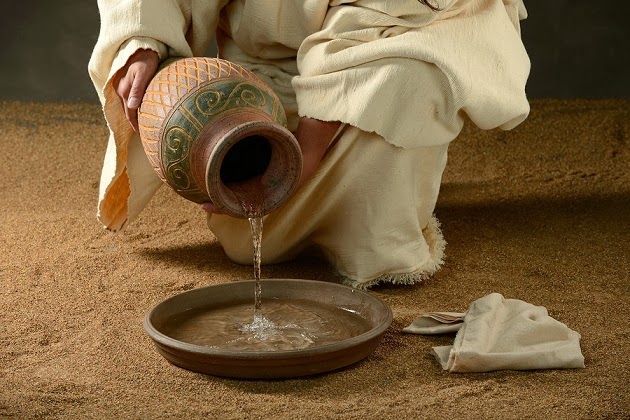
19 Then God opened her eyes and she saw a well of water. She went, and filled the skin with water, and gave the boy a drink. 20 God was with the boy, and he grew up; [time passed] he lived in the wilderness and became an expert with the bow. 21He lived in the wilderness of Paran; and his mother got a wife for him from the land of Egypt. [That’s interesting… Hagar went back to her Egyptian roots and found a wife for Ishmael, reflecting perhaps a cultural responsibility for parents to arrange a marriage for their children.]
What a story, right? I mean the genesis of our faith starts with some jealousy and meanness. And with improbability—two old people having a baby. And with hope—that God’s covenant would come through Abraham’s son Isaac, whose descendants would be more numerous than all the stars in the sky. Indeed, this was a glimpse of God’s bigger picture. And you know, right, who are direct spiritual descendants of Abraham’s promise through Jesus Christ. We are! You and I are each one of the stars in the sky!
But God’s bigger picture also included a promise that a nation would come through Ishmael, Abraham’s firstborn son, whom God delivered out in the wilderness. Indeed, Ishmael is revered in Islam as the progeniture of the Muslim religion. And, according to legend, Ishmael is buried alongside Hagar in Mecca.
So, this passage reminds us that God cares for Muslims as well Christians, Jews and other religious people, for enemies as well as friends. God’s story of love and care, grace and mercy extend beyond any one’s tradition, beyond any one’s doctrines or beliefs. Beyond our sexual orientations or physical abilities or appearances. Beyond any of our self-inflicted sins of religiose or nationalism, biases or prejudices, boundaries or borders. These may challenge us, but Jesus said do not fear. You gain your soul when you follow God’s bigger picture.
So, can we gain our souls? The beginnings of our faith, namely God’s extension of love and grace to everyone—can that stretch deeply into our lives?
In worship today, we are witness to several emphases of our life together. Like I wonder if when we honor our fathers, we simultaneously honor the way fatherhood is about showing a wide berth of God’s love and grace. It’s a bigger picture.
Or I wonder if when we recognize our graduates, we can also recognize God’s care and interest in their future endeavors. Even when there are stumbling blocks or dead ends. God’s care and presence are always there. That’s the bigger picture.
I wonder if when we speak of Pride month, we are also called at the same time recognize the injustice and vulnerability of the people of the LGBTQ+ community. I think we are called to see each person as a unique and beautiful expression of God’s divine light and love. It’s part of God’s bigger picture.
So, I wonder if the quality of the relationships we have with people is directly related to how deeply we let God’s story of love and care, grace and mercy extend into and influence our lives.
That had and gave, grace and mercy, are the rock-solid beginnings of our faith. May God open our eyes to see the well of water in the genesis of our faith. Amen.